AI Agent Software Emerges as the Next Frontier in Enterprise Automation

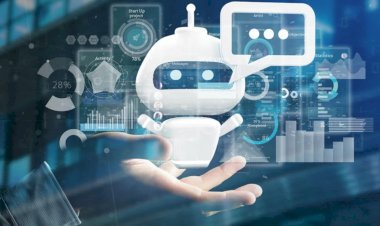
AI agent software is rapidly becoming the backbone of modern enterprises, transforming how organizations automate processes, enhance productivity, and deliver real-time decision-making at scale. These intelligent agents—powered by advanced natural language processing, reinforcement learning, and contextual reasoning—are evolving from simple chatbots into autonomous digital co-workers capable of handling complex business functions.
Leading tech firms like OpenAI, Anthropic, Microsoft, and Google are investing billions into the next wave of AI agents that can perform multi-step reasoning, execute tasks across multiple applications, and collaborate seamlessly with human employees. Unlike traditional automation tools, these agents can independently plan actions, learn from outcomes, and adapt workflows dynamically.
For instance, in a B2B environment, AI agents are now managing full customer lifecycles—from responding to queries and scheduling demos to generating proposals and analyzing client feedback. They can even interface with CRMs like Salesforce and HubSpot to update deal stages, create reports, and notify account managers of upsell opportunities.
“The next evolution of AI is about autonomy and collaboration,” said Thomas Li, Chief Technology Officer at AI startup Neuromind Systems. “We’re moving beyond assistants that just follow commands to agents that proactively make decisions aligned with business goals.”
These AI agents also integrate with productivity suites such as Microsoft 365, Slack, and Notion, allowing real-time collaboration between teams and machines. In manufacturing and logistics, intelligent agents are optimizing supply chains, predicting inventory shortages, and recalibrating delivery routes in seconds.
Analysts predict that by 2027, over 40% of enterprise workflows will be managed or co-managed by AI agents, saving billions in operational costs and freeing human employees to focus on creative and strategic work. However, the rise of AI autonomy also raises questions about accountability, data privacy, and bias management—issues that organizations must address as they integrate these systems deeper into core operations.
AI agent software is rapidly becoming the backbone of modern enterprises, transforming how organizations automate processes, enhance productivity, and deliver real-time decision-making at scale. These intelligent agents—powered by advanced natural language processing, reinforcement learning, and contextual reasoning—are evolving from simple chatbots into autonomous digital co-workers capable of handling complex business functions.
Leading tech firms like OpenAI, Anthropic, Microsoft, and Google are investing billions into the next wave of AI agents that can perform multi-step reasoning, execute tasks across multiple applications, and collaborate seamlessly with human employees. Unlike traditional automation tools, these agents can independently plan actions, learn from outcomes, and adapt workflows dynamically.
For instance, in a B2B environment, AI agents are now managing full customer lifecycles—from responding to queries and scheduling demos to generating proposals and analyzing client feedback. They can even interface with CRMs like Salesforce and HubSpot to update deal stages, create reports, and notify account managers of upsell opportunities.
“The next evolution of AI is about autonomy and collaboration,” said Thomas Li, Chief Technology Officer at AI startup Neuromind Systems. “We’re moving beyond assistants that just follow commands to agents that proactively make decisions aligned with business goals.”
These AI agents also integrate with productivity suites such as Microsoft 365, Slack, and Notion, allowing real-time collaboration between teams and machines. In manufacturing and logistics, intelligent agents are optimizing supply chains, predicting inventory shortages, and recalibrating delivery routes in seconds.
Analysts predict that by 2027, over 40% of enterprise workflows will be managed or co-managed by AI agents, saving billions in operational costs and freeing human employees to focus on creative and strategic work. However, the rise of AI autonomy also raises questions about accountability, data privacy, and bias management—issues that organizations must address as they integrate these systems deeper into core operations.