How AI Is Reshaping Industries, Innovation, and the Future of Human Productivity

Artificial Intelligence (AI) has rapidly evolved from a futuristic concept to the backbone of the world’s most critical industries. What began as isolated experiments in machine learning has now transformed into a global technological revolution redefining how businesses operate, innovate, and compete. Today, AI is not just a trend—it is a fundamental pillar of digital transformation, influencing every layer of society, from daily consumer interactions to high-stakes enterprise decision-making. As companies adopt smart automation, predictive analytics, and generative models at unprecedented speed, AI is rewriting the rules of efficiency, creativity, and economic growth.
At the heart of this transformation lies one undeniable truth: AI is no longer optional. It is a strategic necessity. Organizations that integrate AI early are witnessing exponential gains—faster operations, deeper data insights, reduced costs, and enhanced customer experiences. Meanwhile, those slow to adapt face operational delays, lower competitiveness, and widening digital gaps. This shift is prompting CEOs, CIOs, and policy leaders worldwide to rethink their technology roadmaps and invest aggressively in AI-based systems that can propel their businesses into the next era.
AI’s Expanding Influence Across Key Industries
1. Healthcare: Saving Lives With Intelligence
AI is revolutionizing healthcare with advancements that were once considered impossible. Hospitals use AI-driven diagnostic tools to detect diseases like cancer, heart issues, and neurological conditions faster and with higher accuracy than traditional methods. Robotics-powered surgeries are offering precision and minimal recovery times, while predictive analytics help forecast patient risks before emergencies arise. From personalized treatment plans to AI-powered drug discovery, healthcare is becoming smarter, faster, and more accessible. In the long run, experts predict AI will reduce medical errors significantly, saving millions of lives globally.
2. Finance and Banking: The Rise of Autonomous Systems
The financial sector is experiencing one of the fastest AI transformations. Algorithms now detect fraud in milliseconds, assess creditworthiness more accurately, and automate complex investment strategies. AI chatbots handle millions of customer queries without human intervention, offering instant, 24/7 support. Banks are deploying AI tools to analyze risk, optimize operations, and deliver personalized financial advisory services at scale. The future of fintech is being shaped by AI-enabled automation, blockchain intelligence, and self-learning compliance systems designed to reduce fraud and strengthen security.
3. Marketing and Advertising: Creativity Meets Automation
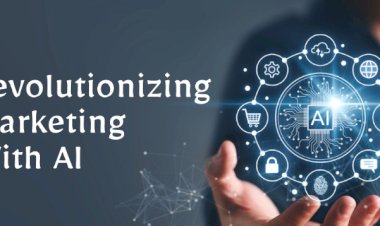
AI is redefining how brands reach and understand their audiences. With advanced data modeling and behavioral analytics, marketers can predict buyer intent, personalize content, and automate multichannel campaigns with extraordinary precision. Generative AI tools are producing high-quality images, videos, and ad copies in seconds, enabling faster creative production cycles. Brands can now test thousands of ad variations simultaneously, allowing AI to optimize performance in real time. This shift has turned marketing into a data-driven discipline where creativity and AI work hand-in-hand to achieve unprecedented ROI.
4. IT and Infrastructure: Building the Intelligent Enterprise
From cloud computing to cybersecurity, AI plays a critical role in strengthening IT ecosystems. Machine learning enhances system reliability, detects threats before they escalate, and automates repetitive maintenance tasks. Modern data centers rely on AI to optimize energy usage, manage workloads, and improve operational efficiency. As enterprises scale their digital footprints, AI becomes the engine that powers resilient, scalable, and secure infrastructure. The rise of AI DevOps and automated monitoring tools ensures IT teams can manage complex systems with increased precision and reduced downtime.
5. Manufacturing and Logistics: Toward the Autonomous Factory
Factories powered by AI-driven robotics, sensors, and predictive maintenance are setting new standards for productivity. Intelligent automation reduces human errors, speeds up production lines, and minimizes equipment breakdowns. In logistics, AI optimizes route planning, warehouse operations, and supply chain forecasting—saving billions in transportation costs. The concept of a self-healing supply chain is becoming a reality, with AI identifying disruptions and automatically adjusting operations. This new industrial revolution is paving the way for fully autonomous, hyper-efficient, and sustainable manufacturing systems.
Generative AI: The Creative Engine of the Future
Generative AI—capable of creating text, designs, code, music, and more—is reshaping the boundaries of human creativity. Tools like ChatGPT, DALL·E, and other generative platforms allow individuals and businesses to produce content at scale without compromising quality. Content creation cycles that once required weeks can now be completed in minutes. Designers can prototype faster, writers can draft complex materials instantly, and developers can generate clean code in seconds.
Beyond productivity, generative AI is helping businesses innovate by:
-
Prototyping new products quickly
-
Simulating customer experiences
-
Training employees through virtual environments
-
Automating content personalization
This shift marks a new milestone where machines complement human creativity, unlocking new possibilities for innovation and growth.
The Ethical and Regulatory Side of AI
As AI expands, so do questions about ethics, privacy, and accountability. Governments worldwide are developing AI regulations aimed at promoting safe usage, data protection, and algorithm transparency. Concerns about bias, misinformation, and job displacement require careful oversight and responsible development. Ethical AI frameworks emphasize fairness, explainability, and safeguarding human decision-making.
The conversation is evolving from “Can AI do this?” to “Should AI do this?”—a crucial distinction that will shape the future of global AI governance.
The Future of AI: What Lies Ahead
AI is still in its early stages, and the next decade will unlock possibilities beyond anything seen so far. Experts predict advancements such as:
-
Fully autonomous customer service systems
-
Predictive governments capable of forecasting national risks
-
Intelligent cities powered by AI-based traffic and energy systems
-
Personalized AI assistants for every individual
-
Cross-industry automation eliminating inefficiencies at scale
As AI continues to evolve, the focus will shift from automation to augmentation—working alongside humans to enhance decision-making, creativity, and complex problem-solving.
Conclusion: AI Is the Catalyst of the Next Global Transformation
Artificial intelligence is not just a technological upgrade—it is a global economic shift reshaping industries, business models, and human capabilities. From healthcare to finance, IT to marketing, logistics to governance, AI is becoming the driving force of progress.
Businesses that embrace AI now will lead the future. Those who hesitate risk falling behind in a world where intelligence, speed, and automation define competitive advantage. The age of AI has arrived, and its impact will continue to expand—redefining how we work, think, create, and thrive in the digital era.