How AI, Automation, and Leadership are Redefining the Tech Landscape
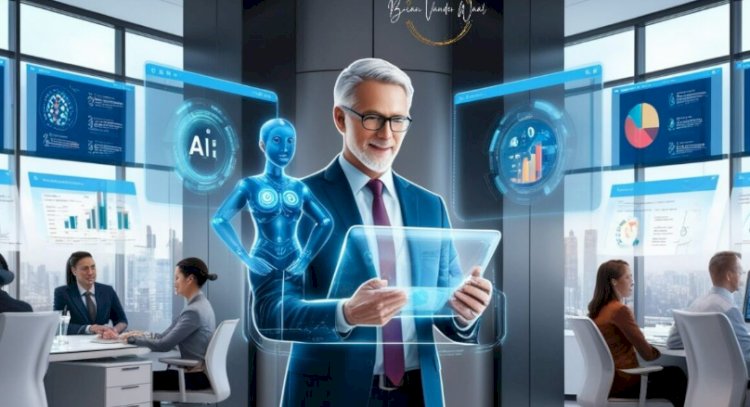
The technology industry is undergoing one of the most significant transformations in its history. Artificial intelligence, automation, and modern leadership approaches are converging to redefine how organizations innovate, scale, manage talent, and deliver value. What was once a linear progression in tech development has now become a rapid, multidimensional shift—reshaping not only products and services but also the strategic mindset required to thrive in a digital-first world.
AI: The New Driving Force of Innovation
Artificial intelligence has moved far beyond experimental labs and into the core of business operations. From predictive analytics and intelligent automation to generative models producing creative content and code, AI is fundamentally changing how companies operate. It enhances decision-making by extracting insights from massive datasets, accelerates development cycles, and allows businesses to personalize customer experiences at an unprecedented scale.
AI is no longer just a tool—it is becoming the backbone of new business models. Companies that successfully integrate AI into their workflows are seeing improvements in efficiency, accuracy, and speed. Meanwhile, industries that once relied heavily on manual processes—such as healthcare, finance, manufacturing, and retail—are reinventing themselves through AI-powered capabilities.
Automation: Unlocking Scalability and Removing Bottlenecks
Automation is bridging the gap between human potential and operational excellence. Today’s automation tools are more sophisticated, adaptable, and intelligent than ever before. They streamline repetitive processes, eliminate human errors, and free teams to focus on strategic, creative, and high-value tasks.
Robotic Process Automation (RPA), workflow orchestration, and autonomous systems are enabling organizations to scale efficiently. From automated cybersecurity monitoring to real-time supply chain optimization, automation enhances reliability and strengthens the ability to respond to market changes quickly.
In combination with AI, automation evolves into intelligent automation—systems that not only follow rules but also learn, adapt, and optimize over time. This synergy allows businesses to predict issues before they arise, reduce operational costs, and increase overall productivity.
Leadership in the Age of Intelligent Technologies
As AI and automation take center stage, leadership is also transforming. Modern leaders are no longer just decision-makers—they are visionaries who understand technology’s potential and motivate teams to embrace innovation. In this evolving landscape, leadership must be rooted in empathy, adaptability, and continuous learning.
Tech leaders today face unique challenges: navigating ethical AI implementation, managing innovation at scale, ensuring organizational transparency, and maintaining trust in an age where machines influence major decisions. Successful leaders foster a culture that encourages experimentation and collaboration while ensuring responsible use of AI-driven systems.
Moreover, leadership now demands a strategic blend of technical literacy and human-centered thinking. Leaders must guide teams through digital transitions, reskill workforces, and create balanced environments where humans and technology complement each other rather than compete.
Reskilling and Workforce Evolution
AI and automation are transforming roles across industries, demanding new skill sets and redefining existing ones. The workforce of the future will rely heavily on digital literacy, data fluency, and creative problem-solving. Organizations must be proactive in reskilling employees, offering learning pathways that align with technological advances.
Rather than replacing jobs outright, AI is reshaping them. Routine work is increasingly automated, while roles requiring critical thinking, innovation, design, and emotional intelligence are growing. Companies that invest in talent development will remain competitive, while those that resist transformation risk falling behind.
The Convergence of AI, Automation, and Leadership
The true transformation happens when AI, automation, and leadership work together. A powerful synergy emerges when:
-
AI provides insights,
-
automation executes tasks, and
-
leadership sets vision and direction.
Organizations that can successfully integrate these elements are more agile, resilient, and innovative. They improve customer engagement, strengthen internal processes, and unlock new revenue opportunities through data-driven strategies.
What the Future Holds
In the coming years, the tech landscape will continue evolving at high speed. AI-driven decision-making, autonomous systems, and ethical governance frameworks will become standard. Businesses with forward-looking leadership and a deep commitment to innovation will set the pace for global transformation.
The companies that thrive will be those that embrace AI and automation not as threats, but as catalysts for new possibilities. With strong leadership guiding this shift, technology will unlock unprecedented growth—redefining industries, reshaping workforces, and creating a future where human creativity and intelligent machines work hand in hand.
Conclusion
AI, automation, and modern leadership are not just reshaping the tech industry—they are rewriting the rules of the global economy. Organizations that combine technological innovation with strategic, human-centered leadership are building the foundation for the next era of progress. As we move forward, the partnership between people and intelligent systems will define the future of work, business, and innovation.