

Table of Contents
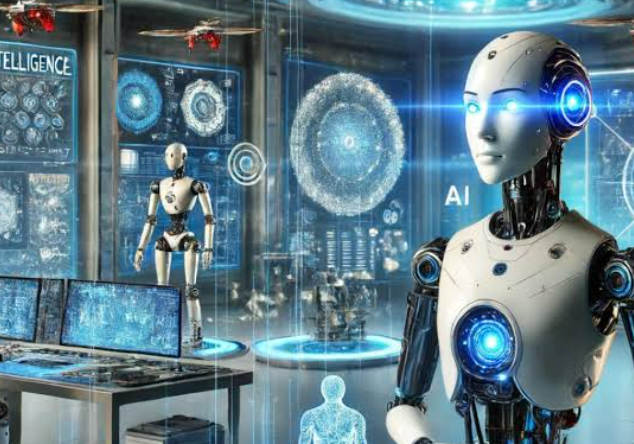
Artificial intelligence and robotics are rapidly converging to create a new generation of intelligent machines capable of sensing their surroundings, understanding complex information, making decisions, learning from experience, and performing physical tasks with increasing levels of autonomy. While robotics has traditionally focused on programmable machines designed to perform repetitive or highly controlled operations, the integration of AI is transforming robots into adaptive systems that can operate in more dynamic environments. From manufacturing floors and warehouses to hospitals, agriculture, logistics, retail, and space exploration, AI-powered robotics is emerging as one of the most significant technology trends shaping the next phase of digital transformation.

The evolution is being driven by advances in machine learning, computer vision, natural-language processing, generative AI, edge computing, sensors, autonomous navigation, and increasingly sophisticated robotic hardware. Instead of simply following a predefined sequence of commands, modern robots can interpret visual information, identify objects, respond to changing environments, and make decisions based on real-time data. This shift is creating what many organizations see as a new category of intelligent automation—systems that combine the reasoning capabilities of AI with the physical capabilities of robotics.
From Automation to Intelligent Autonomy
Traditional industrial robots have been highly effective at repetitive tasks such as welding, painting, assembly, packaging, and material handling. However, these machines generally operate within carefully controlled environments and require explicit programming for specific tasks.
AI is changing that model.
With computer vision and machine-learning algorithms, robots can increasingly recognize objects, detect anomalies, estimate distances, understand movement, and adapt their actions. A warehouse robot, for example, can identify packages of different sizes and shapes, navigate changing routes, and coordinate its movements with other automated systems. A manufacturing robot can use cameras and sensors to identify defects that might otherwise require manual inspection.
Generative AI is also introducing a new interaction layer. Instead of requiring highly technical programming for every operation, future robotic systems could increasingly understand natural-language instructions. A worker might be able to tell a robot to “move these components to the inspection station” and have the system interpret the instruction, identify the relevant objects, determine a suitable route, and execute the task.
This combination of perception, reasoning, and physical action represents a major change in the role of robots within the enterprise.
AI-Powered Robotics Accelerates Manufacturing Transformation
Manufacturing remains one of the strongest environments for robotics adoption. Rising demand for productivity, quality, customization, and operational efficiency is encouraging manufacturers to invest in intelligent automation.
AI-powered robots can support assembly lines, quality-control operations, inventory management, predictive maintenance, packaging, and material movement. Computer vision systems can inspect products at high speed and identify defects based on patterns that may be difficult for humans to detect consistently.
Predictive maintenance is another important application. Sensors installed on machines can continuously collect information about vibration, temperature, pressure, energy consumption, and other operating conditions. AI models can analyze these signals and identify patterns associated with equipment failure. Instead of waiting for a machine to break down, manufacturers can potentially schedule maintenance before a major failure occurs.
This can reduce unplanned downtime while improving asset utilization.
The emergence of collaborative robots, or cobots, is also changing factory environments. Rather than being completely separated from human workers, cobots are designed to work alongside people in tasks where humans provide judgment, flexibility, or dexterity while machines handle repetitive or physically demanding activities.
Warehouses Are Becoming More Autonomous
E-commerce growth and increasingly complex supply chains are creating strong demand for automated warehouse operations. AI-powered mobile robots can move inventory, transport packages, optimize routes, and coordinate activities across large facilities.
The real advantage is not simply the ability to move products faster. Intelligent systems can analyze warehouse data and determine how inventory should be positioned, which routes are most efficient, and how different robots should coordinate their movements.
AI can also help warehouses respond to changing demand. During periods of high order volumes, automated systems can dynamically adjust workflows and prioritize tasks.
As businesses increasingly expect faster fulfillment and greater supply-chain visibility, AI-powered robotics could become a critical component of modern logistics infrastructure.
Healthcare Robotics Moves Beyond Surgery
Healthcare is another sector where AI and robotics are creating new opportunities. Surgical robots have already demonstrated how advanced machines can assist doctors with highly precise procedures. However, the future of healthcare robotics extends beyond the operating room.
Hospitals are exploring robotic systems for patient assistance, medication delivery, disinfection, rehabilitation, laboratory automation, and logistics. AI can enable robots to interpret their surroundings and respond more intelligently to patients and healthcare workers.
Rehabilitation robotics is particularly promising. AI-enabled systems can analyze movement patterns and adapt exercises according to a patient’s performance. In laboratory environments, robotic systems can automate repetitive procedures, allowing researchers and technicians to dedicate more time to complex analytical work.
The objective is not necessarily to replace healthcare professionals. Instead, intelligent robotics can take over repetitive, physically demanding, or highly standardized activities while humans remain responsible for clinical judgment, empathy, and complex decision-making.
Humanoid Robots Enter the Spotlight
One of the most visible developments in robotics is the growing interest in humanoid robots.
Humanoid machines are designed to operate in environments built for humans. Because factories, warehouses, offices, homes, and public infrastructure are generally designed around human movement and tools, a robot with a human-like form could theoretically perform a wider variety of tasks without requiring environments to be completely redesigned.
The challenge, however, is enormous.
Humanoid robots need advanced balance, dexterity, perception, navigation, manipulation, energy management, and decision-making capabilities. AI is becoming a critical component because the robot must interpret a complex environment and determine what actions are appropriate.
The combination of large AI models and robotics could eventually allow robots to learn broader task categories instead of being individually programmed for every possible situation. This could accelerate the development of general-purpose robots capable of performing multiple tasks.
Agriculture Becomes More Data-Driven
Agriculture is also becoming an important application area for AI and robotics. Autonomous machines can potentially support planting, crop monitoring, harvesting, weed detection, and precision spraying.
Computer vision can identify differences between crops and weeds, while AI models can analyze plant health and environmental conditions. Robotic systems can then act on this information by targeting specific areas rather than applying resources uniformly across an entire field.
This approach can improve the efficiency of water, fertilizer, and pesticide usage while helping farmers make decisions based on real-time field conditions.
Autonomous agricultural machinery could become particularly valuable as farms face labor shortages and increasing pressure to improve productivity while managing resource constraints.
The Rise of Physical AI
A major emerging concept in the technology industry is “physical AI”—AI systems that can interact with and learn from the physical world.
Large language models primarily operate in the digital environment, processing text, images, audio, and other forms of information. Robots must deal with gravity, friction, movement, obstacles, unpredictable objects, humans, and constantly changing surroundings.
Physical AI attempts to bridge that gap.
Robots need to connect perception with action. They must see an object, understand what it is, determine how to interact with it, and execute the movement safely. This requires sophisticated combinations of AI models, sensors, actuators, simulation environments, and control systems.
As these technologies improve, robots may become increasingly capable of learning through simulation, demonstrations, and real-world experience.
AI and Robotics Will Transform the Workforce
The rapid development of intelligent machines is also raising important questions about employment.
Some jobs will undoubtedly change as robots take over repetitive and predictable activities. Manufacturing, logistics, inspection, transportation, and warehouse operations are among the areas likely to experience significant transformation.
However, automation does not necessarily mean that all human jobs disappear. Historically, technological change has also created new roles and industries. The workforce of the future may increasingly require people who can manage robotic systems, analyze machine-generated data, supervise autonomous operations, design AI workflows, maintain robotic infrastructure, and ensure that automated systems operate safely.
The most significant change may therefore be a shift in job responsibilities rather than a simple replacement of humans by machines.
Workers may increasingly collaborate with AI systems and robots, with machines handling repetitive physical or analytical tasks while humans focus on creativity, strategy, communication, leadership, and complex judgment.
Challenges Remain
Despite rapid progress, AI-powered robotics is far from solving every real-world challenge.
Robots can still struggle with unpredictable environments, delicate manipulation, unusual objects, poor lighting, crowded spaces, and unexpected human behavior. Hardware remains expensive for many applications, and maintaining sophisticated robotic systems requires specialized expertise.
Safety is another major consideration. A robot operating around humans must be able to detect people and objects accurately and respond appropriately. Organizations also need clear procedures for monitoring autonomous systems and managing failures.
Cybersecurity is equally important. Connected robots are effectively physical endpoints within an organization’s technology infrastructure. A compromised robotic system could create consequences that extend beyond data loss and potentially affect physical operations.
Privacy is another concern, particularly for robots equipped with cameras, microphones, and environmental sensors. Organizations deploying these systems must carefully consider how data is collected, processed, stored, and used.
Businesses Prepare for a Robotic Future
For businesses, the question is increasingly shifting from whether AI and robotics will affect operations to where intelligent automation can create the greatest value.
Companies are likely to begin with targeted use cases where tasks are repetitive, measurable, and relatively predictable. Once organizations gain experience with automation, they can expand toward more complex workflows.
Successful adoption will require more than purchasing robots. Businesses will need appropriate infrastructure, data systems, cybersecurity controls, employee training, maintenance capabilities, and clearly defined human oversight.
Organizations that approach robotics as part of a broader AI and digital-transformation strategy may be better positioned to capture its long-term value.
The Road Ahead
The convergence of AI and robotics represents a fundamental shift in how machines interact with the world. Robots are moving from fixed-function automation toward systems that can perceive, learn, reason, and adapt.
The next phase of development will likely focus on making these systems more reliable, affordable, energy-efficient, safe, and capable of operating in complex environments. Improvements in AI models, sensors, batteries, actuators, simulation, and edge computing will continue to influence the pace of progress.
The long-term vision is not simply a world filled with robots. It is a world in which intelligent machines become integrated into physical and digital workflows, working alongside people and supporting organizations across industries.
AI provides machines with increasingly sophisticated intelligence. Robotics gives that intelligence a physical presence.
Together, they could redefine automation, manufacturing, healthcare, logistics, agriculture, and countless other industries. The organizations that begin experimenting with this convergence today will have an opportunity to understand its capabilities, limitations, and economic value before intelligent robotics becomes a mainstream part of everyday business operations.
Have any thoughts?
Share your reaction or leave a quick response — we’d love to hear what you think!
-
 0
0 -
 0
0 -
 0
0 -
 0
0 -
 0
0 -
 0
0

